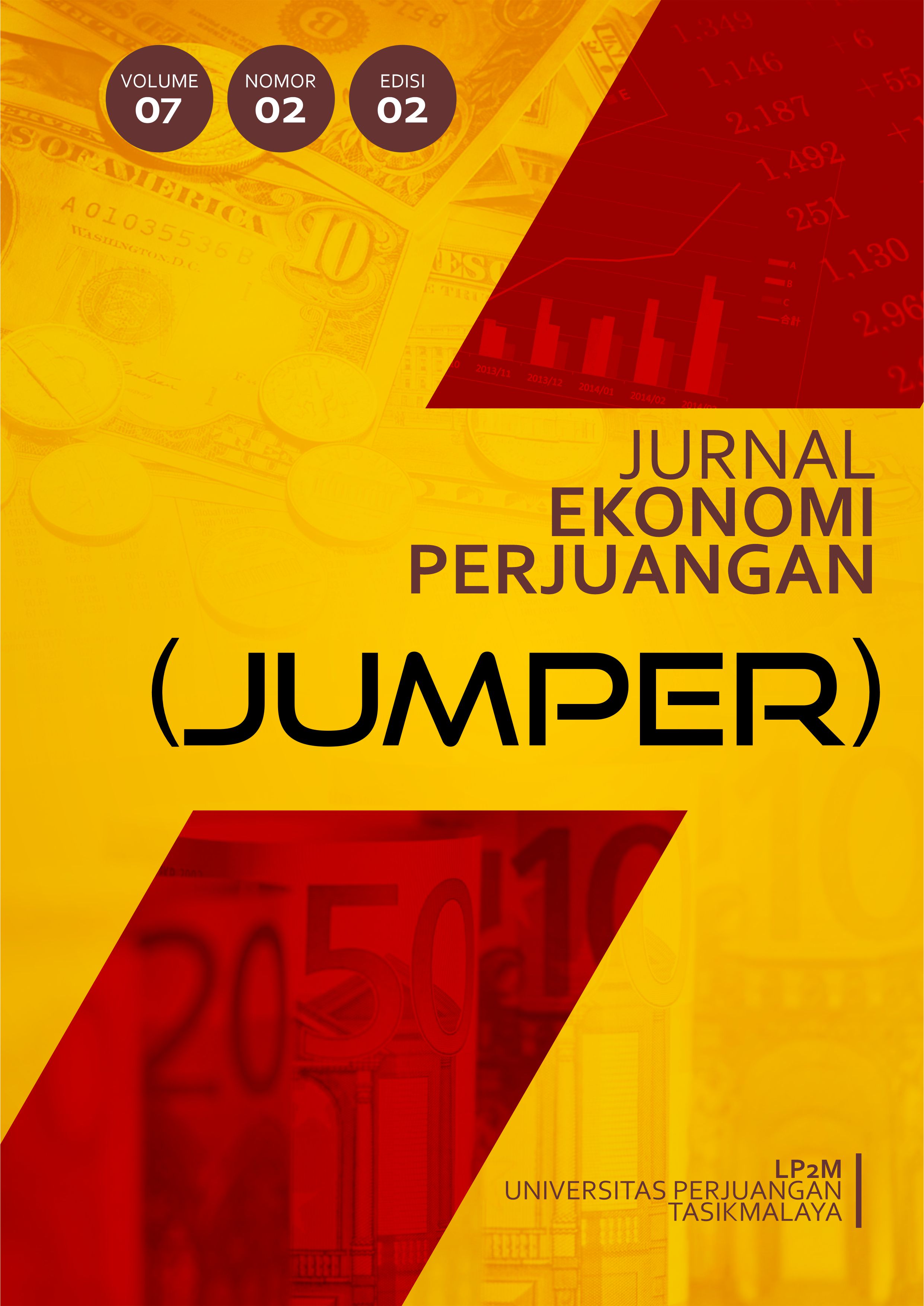
ARTIFICIAL INTELLIGENCE DALAM PROSEDUR AUDIT SEBUAH SYSTEMATIC LITERATURE REVIEW
DOI:
https://doi.org/10.36423/jumper.v7i2.2509Keywords:
Artificial Intelligence, auditing, audit proceduresAbstract
This study aims to examine the role of Artificial Intelligence (AI) in auditing procedures and evaluate its benefits and challenges. Using a Systematic Literature Review approach based on the PRISMA method, this research analyzes 14 relevant scientific articles published between 2014 and 2024. The findings indicate that AI has been widely applied across various stages of the audit process, including planning, internal control testing, substantive procedures, and reporting. Technologies such as Robotic Process Automation (RPA), Machine Learning (ML), Natural Language Processing (NLP), and Optical Character Recognition (OCR) have proven effective in improving audit efficiency, accuracy, and coverage by automating routine tasks and detecting anomalies in real time. However, the adoption of AI also faces challenges such as algorithm transparency limitations, data bias, privacy issues, and auditors’ limited understanding of the technology. The study concludes that the successful integration of AI into auditing depends heavily on auditor readiness, the development of transparent and accountable systems, as well as supportive regulations and ethical frameworks. This research is expected to contribute both academically and practically to the auditing profession in the era of digital transformation.
References
Accountability State Authority (ASA) of Egypt. (2023). The Use of Artificial Intelligence (AI) in the Execution of Audits. International Organization of Supreme Audit Institutions.
Adeoye, I. O., Akintoye, R. I., Aguguom, T. A., & Olagunju, O. A. (2023). Artificial intelligence and audit quality: Implications for practicing accountants. Asian Economic and Financial Review, 13(11), 756–772. https://doi.org/10.55493/5002.v13i11.4861
Afrida, T., Prasetya, A., & Putra, D. (2023). Kualitas Audit dan Independensi Auditor. Journal of Economic Education and Entrepreneurship Studies, 4(2), 711–728.
Allozi, Y., Nawaiseh, A., Al-Mawali, H., Abbod, M., & Alshurideh, M. (2024). The impact of artificial intelligence on the quality of external auditing in Jordanian commercial banks: The mediating role of the quality of financial reports. International Journal of Data and Network Science. https://doi.org/10.5267/j.ijdns.2024.7.013
Arens, A. A. (2020). Auditing and assurance services: An integrated approach (Seventeenth edition). Pearson.
Davis, F. D. (1989). Perceived usefulness, perceived ease of use, and user acceptance of information technology. MIS Quarterly, 13(3), 319–340. https://doi.org/10.2307/249008
Du, Xinyu. (2024). Impact of Artificial Intelligence on Auditing and the Future of Human Workforce Replacement. Advances in Economics, Management and Political Sciences, 115(1), 112–119. https://doi.org/10.54254/2754-1169/115/2024BJ0205
Fedyk, A., Hodson, J., Khimich, N., & Fedyk, T. (2022). Is artificial intelligence improving the audit process? Review of Accounting Studies, 27(3), 938–985. https://doi.org/10.1007/s11142- 022-09697-x
Ghanoum, S., Alaba, F. M., Smith, E., & Umans, T. (n.d.). Integration of Artificial Intelligence in Auditing: The Effect on Auditing Process.
Griffin, O. (2019). How artificial intelligence will impact accounting. Economia.
Henry, H., & Rafique, M. (n.d.).(2021) Impact of Artificial Intelligence (AI) on Auditors: A Thematic Analysis.
Imane, L. (2025). Artificial intelligence in financial auditing: Improving efficiency and addressing ethical and regulatory challenges. Brazilian Journal of Business, 7(1), e76833. https://doi.org/10.34140/bjbv7n1-017
Jancura, E. G. (1975). Electronic data processing: Evidential matter in the audits of computerized records. Woman C.P.A., 37(3), Article 5. https://egrove.olemiss.edu/wcpa/vol37/iss3/5
Downloads
Published
Issue
Section
License
Copyright (c) 2025 rendi kusuma natita; Rakhmat Siraz

This work is licensed under a Creative Commons Attribution-NonCommercial-ShareAlike 4.0 International License.
The Authors submitting a manuscript do so on the understanding that if accepted for publication, copyright of the article shall be transferred to Jurnal Ekonomi Perjuangan (JUMPER)
This is an open-access journal in accordance with the Creative Commons Attribution-ShareAlike 4.0 International (CC BY-SA 4.0) license.
This permits users to:
Share - copy and redistribute the material in any medium or format
Adapt - remix, transform, and build upon the material for any purpose, even commercially
Under the following terms:
Attribution - You must give appropriate credit, provide a link to the license, and indicate if changes were made. You may do so in any reasonable manner, but not in any way that suggests the licensor endorses you or your use.
ShareAlike - If you remix, transform, or build upon the material, you must distribute your contributions under the same license as the original.
No additional restrictions - You may not apply legal terms or technological measures that legally restrict others from doing anything the license permits.